Buy, Return, Profit: Inside the Gray Market That's Costing Retailers Billions — and Who's Really Paying for It
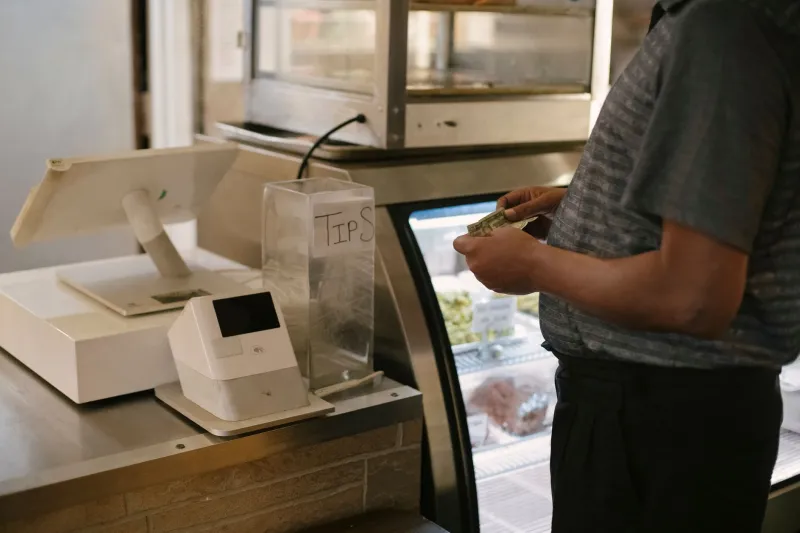
Somewhere in a suburban strip mall, a shopper walks out of a department store with a full refund and a smile. The item they returned was worn to a wedding last weekend. The tags were carefully re-attached. The receipt was pristine. The return was approved without a second glance.
Multiply that by millions of transactions per year, and you start to understand why the National Retail Federation estimated return fraud cost US retailers $101 billion in 2023 alone. That's not a rounding error. That's a structural wound in the American retail economy — and it's being inflicted by everyone from individual opportunists to sophisticated organized networks that treat lenient return policies like a recurring revenue stream.
Welcome to the refund loophole economy. It's bigger than you think, more organized than you'd expect, and about to get a lot harder to pull off.
The Spectrum of Return Abuse (It's Not All Petty Theft)
Before we go further, it's worth being clear: "return abuse" covers a wide spectrum of behavior, and not all of it is created equal — legally or ethically.
At the relatively harmless end, you have wardrobing: buying clothing or electronics for a specific event or purpose, using it, and returning it within the policy window. Technically within the rules. Widely practiced. The fashion industry has been quietly absorbing this cost for decades.
Step up the scale and you get strategic serial returners — shoppers who have mastered the art of buying at full price, waiting for a sale, and then returning the original purchase at the lower price to capture the price difference. Or buying multiple sizes online, keeping one, and returning the rest — a behavior so common that most major retailers have already built it into their loss models.
At the organized end of the spectrum, things get genuinely criminal. Return fraud rings operate with the precision of a retail arbitrage business. They use stolen credit cards to purchase merchandise, return it for store credit or gift cards, and then liquidate those cards for cash. Others obtain fraudulent receipts — sometimes through receipt-generation software, sometimes through complicit employees — to return merchandise they never actually purchased.
Then there's the emerging hybrid model: individuals who buy discounted or clearance merchandise, use it briefly, and return it to a different store location for full price, pocketing the spread. Retail arbitrage in reverse.
The Organizational Layer Nobody Talks About
What's changed in recent years isn't the existence of return fraud — it's the coordination. Online communities (some on Reddit, some on private Discord servers, some on Telegram channels with thousands of members) now share real-time intelligence on which retailers have the loosest policies, which employees are least likely to scrutinize returns, and which product categories carry the highest resale margins after a fraudulent return cycle.
These aren't shadowy criminal enterprises in the traditional sense. Many participants think of themselves as playing a game — finding inefficiencies in corporate systems and exploiting them. The moral framing is conveniently detached: it's a big corporation, not a person, absorbing the loss.
But the downstream math is unforgiving. Retailers don't absorb fraud losses quietly. They model them into pricing, tighten policies across the board, and — inevitably — pass costs to ordinary consumers who never abused anything.
The Financial Carnage by the Numbers
The NRF's 2023 data puts total retail returns at $743 billion — roughly 14.5% of total retail sales. Of that, an estimated 13.7% is fraudulent or abusive. That's not a rounding error. That's a number that influences staffing decisions, return window lengths, restocking fees, and the increasingly aggressive ID-collection practices you've probably noticed at the returns counter.
Retailers like Best Buy, Home Depot, and REI have all publicly adjusted their return policies in response to rising abuse rates. REI — long celebrated for its legendarily generous return policy — famously tightened its terms after discovering that a small percentage of members were returning gear years after purchase, sometimes in obviously used condition.
Target and Amazon both now use third-party return analytics firms that track individual return behavior and flag accounts showing patterns consistent with abuse. Some shoppers have received notices that their return privileges have been restricted or revoked — with no appeal process and no detailed explanation.
Where the Legal Lines Actually Fall
Here's where it gets complicated. Much of what happens in the gray zone of return abuse isn't clearly illegal under federal law. Wardrobing, for example, is a breach of the spirit of a return policy but not necessarily fraud in a legal sense — the item is returned in an arguably returnable condition, and the retailer has the option to reject the return and doesn't.
Organized return fraud using stolen payment methods or counterfeit receipts is unambiguously criminal — wire fraud, theft by deception, and related charges apply. Several high-profile federal prosecutions in recent years have resulted in multi-year sentences for ring operators.
The murky middle — buying legitimately, returning strategically, exploiting price-match loopholes — lives in a gray zone that civil attorneys and retail loss-prevention specialists argue about constantly. Most retailers have shifted to treating policy abuse as a customer relationship issue rather than a legal one: they simply restrict your account and move on.
The Retailer Counterpunch Is Coming
The era of no-questions-asked returns is ending, and it's ending fast. Here's what's already in motion:
Return fees. Amazon, Zara, H&M, and others have introduced fees for certain return methods, particularly mail returns that were previously free. This friction alone has reduced return rates measurably.
Behavioral analytics. Companies like Appriss Retail sell return fraud detection systems to major chains that analyze return history, purchase patterns, and ID data to generate real-time risk scores. Your return at the register is being scored whether you know it or not.
Receipt-free return restrictions. Policies that once allowed generous store-credit returns without a receipt are tightening across the industry. The data suggests receipt-free returns are disproportionately associated with fraud.
Keep-it refunds. For low-cost items, some retailers now offer refunds without requiring the item back — eliminating the logistics cost while also removing the resale arbitrage opportunity from the return cycle entirely.
The Bigger Picture
The refund loophole economy is a fascinating case study in what happens when corporate generosity meets human ingenuity at scale. Retailers built return policies to compete on customer experience. A subset of consumers — ranging from individual opportunists to organized networks — found the edge cases and pushed them until the system started breaking.
Now the correction is underway. Policies are tightening. Surveillance is increasing. The window for exploiting retailer generosity is narrowing in real time.
For the average consumer who returns a pair of pants that didn't fit? The impact is mostly inconvenience — more friction, occasional fees, the mild indignity of showing your ID for a $30 return. For the organized players who built income streams around return arbitrage? The walls are closing in, and the algorithms are already watching.